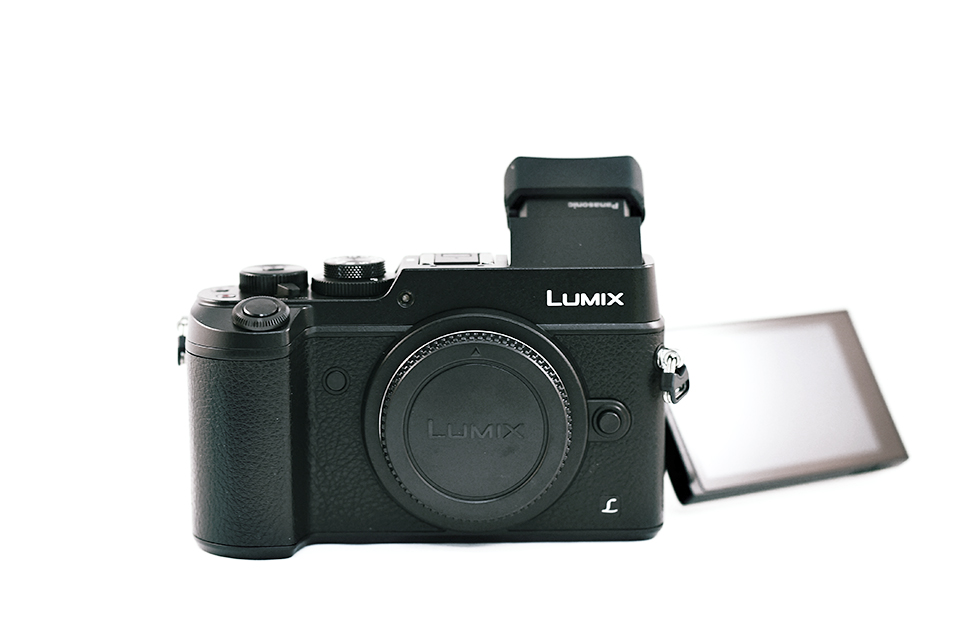
I had the pleasure of reviewing the Lumix GX8, the successor of the GX7. I must say it’s quite a camera and I will tell you why.
(review video for Kamera Express, Dutch only)
Improvements
Firstly the key improvements are the new 20 MPX sensor, Venus Engine Image processor, 4K video and faster AF-system. For me the most important improvements are the faster AF in both video and stills, the faster burst of 10 pics per second and the larger body/ grip.
Not only is this camera specs-wise better than the GX7, the whole handeling is better. Buttons are more logically placed and the camera reacts faster, which is essential on the streets.
Option overload?
One downside of this camera, after only using it for this review, are the extensive options. I’m quite basic when using a camera, so I immediately noticed lots if options I normally don’t need. So there were moments I had to search for a specifik setting. This is a personal thing maybe, these extensive options quite be practical for another person.
In short
This camera has quite a large sensor so expect to see good quality photos, nice shallow depth and good low light performance. A small body(compared to reflex bodies) and especially awesome small build lenses with great performance. Luckily the GX8 has still kind of the same body as the GX7, so perfect for street photography thanks to its retro rangefinder look.
Before I get into this nice piece of glas, let’s answer some of the common general questions I get: Why Sigma? Aren’t they just a cheaper imitation of the Canon lenses?
I get why people sometime ask me these questions, because yes Sigma used to produce cheaper versions of Canon lenses (also other brands). So several years ago one bought a Sigma lens to get a more affordable lens with almost the same quality. But that’s in the past now! Sigma launched their ‘Art’ series lenses, which aren’t only better in performance but some are even more expensive than the Canon lenses. Now when you decide to purchase an Art lens of Sigma you want to get the best in performance and build quality.
shot at f1.4 (bit color fringing)
nice bokeh at f1.4
Sigma 50mm f1.4 Art
One of the most spoken Art lens is the 50mm f1.4, which seems to be even better than both the 50mm f1.4 and f1.2 of Canon. That’s why I decided to test this nice piece of glass.
This new lens is perfect for portrait and wedding photography. It’s great to see Sigma making such professional lenses. Thanks to the f1.4 the depth of fields is shallow and good for isolating the subject.
Build
The 50mm lens is well designed and solidly build, as expected of an Art lens. I like the simplicity of its design and the large focus ring. There’s only a MF/AF switch on the barrel and of course the nice shiny ‘A’ logo. The weight and size of this lens is too much for me …walking the streets with this lens would be quite uncomfortable with a tired wrist at the end of the day. When comparing this lens to my Canon 50mm f1.8 II the Sigma really is large, heavy and professionally build.
large front element 77mm
clean and solid design
Performance
When looking at it’s performance it does the job. The photos are sharp, shot fully open at f1.4 the centre is sharp but unfortunately it shows quite some vignetting. Closing the aperture to f2.8 makes the vignetting disappear and the photograph more useful, for me that is. When doing studio work, this lens could be your choice.
vignetting at f.14
size 50mm canon 1.8 vs sigma 1.4
Conclusion
Yes, Sigma made one piece of ‘art’. The quality it delivers is good and the build is professional. No doubt about it. If you need a lens that gives the best quality, the Sigma Art is the lens of choice. It may be heavy and large, but that’s needed to get the quality and light sensitivity. I already got the 24-105mm Art lens for most my shoots, which works perfect. The 50mm Art a nice lens for a shoot, wedding and especially studio work. For me I’d rather mount my Canon 50mm when hitting the streets, it’s smaller, lighter and also gets the job done (with less quality). On the streets it’s not only the quality that matters, the more practical use of the lens is more important in my honest opinion.